
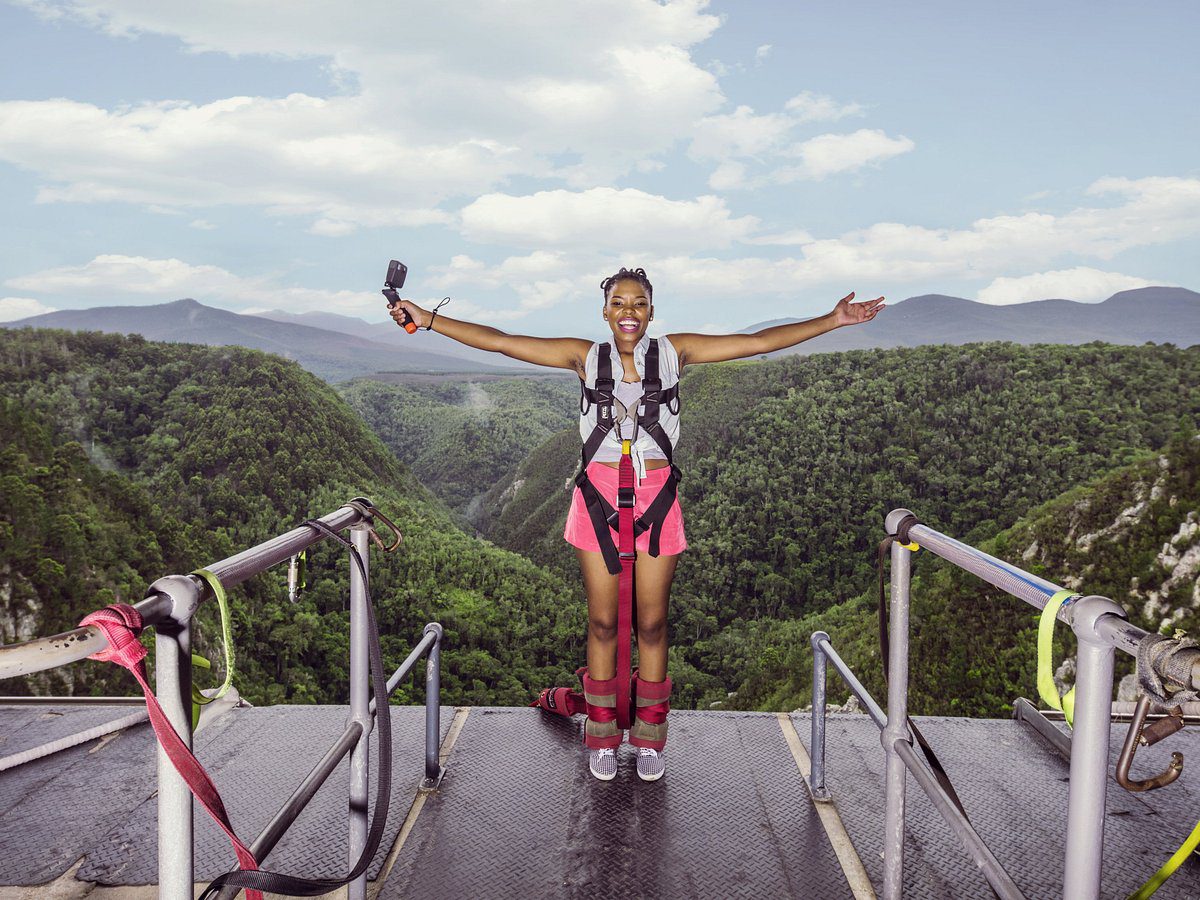
Here is something the crew at Bloukrans will tell you that most people find hard to believe. A large share of the people who jump off this bridge are afraid of heights. Not mildly uneasy. Properly afraid.
Being scared of heights is not a reason you cannot do this. For a lot of people it is the reason they came.
Fear of heights is normal, and it is not the same as a phobia
Almost everyone gets a physical reaction near a big drop. Tight chest, unsteady legs, a strong pull to step backwards. That is a healthy nervous system doing its job.
Acrophobia is different. It is a diagnosed anxiety disorder where the response is severe enough to interfere with normal life, and it can involve panic attacks or freezing. If that describes you, this post is not a substitute for advice from a professional who knows your history.
For everyone else, the ordinary garden variety fear of heights is something the crew here manage every single day.
The fear peaks before the jump, not during it
This is the single most useful thing to understand.
Fear needs time and options to build. It thrives on standing still with a decision in front of you. Once you are actually falling there is no decision left to make, and most people report that the panic stops almost immediately after they leave the platform.
The worst part is the anticipation. The jump itself is over in seconds.
The four hardest moments, in order
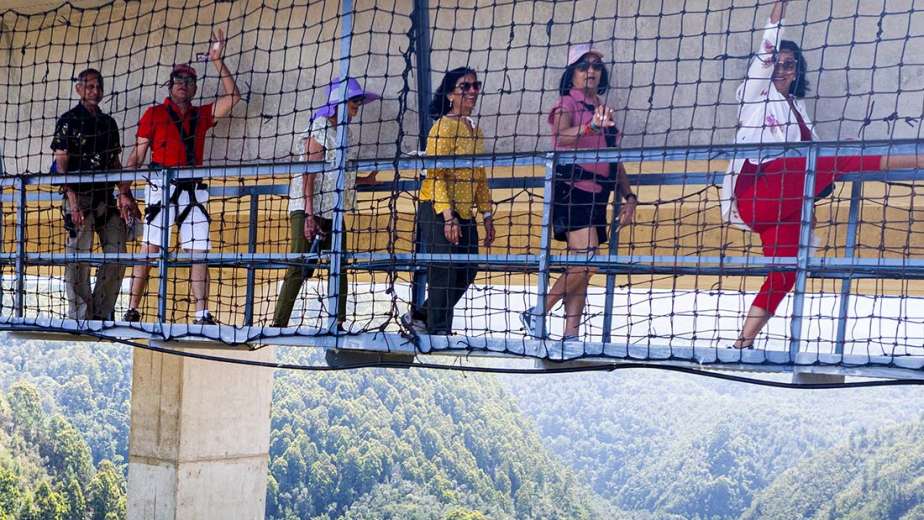
- The walk out. Crossing the SkyWalk to the platform with the gorge below you. This is where most people say the fear was worst.
- Waiting your turn. Watching other people go while your own turn gets closer.
- The shuffle to the edge. Ankles bound, moving forward in small steps.
- The count. Two or three seconds, and then it is done.
Notice that the actual jump is not on that list.
What your body will do, and why none of it is a problem
Shaking legs, a dry mouth, a racing heart, tunnel vision, sudden talkativeness or sudden silence. Some people feel briefly nauseous. All of this is adrenaline, all of it is expected, and none of it means you are not coping.
The crew are not judging your reaction. They have seen every version of it, including the ones people are embarrassed about.
Six things that genuinely help
- Tell the crew you are scared. This changes how they handle you. It is the most useful sentence you can say all day.
- Go early in your group. Every minute you spend watching is a minute the fear gets to grow.
- Do not look straight down while you wait. Look out at the gorge instead. Horizontal is fine, vertical is what triggers it.
- Breathe out longer than you breathe in. A long exhale genuinely slows your heart rate. It is not a relaxation cliche, it is physiology.
- Commit before you reach the edge. Decide on the walk out, not on the platform. Arrive having already made the choice.
- Go on the count. This is the big one. Do not renegotiate at zero.
What if I get out there and cannot do it
Then you do not do it. Nobody is pushed off this bridge, and nobody is shamed for changing their mind. It happens, the crew handle it calmly, and you walk back the way you came.
Knowing that the exit exists tends to make people more likely to jump, not less. Fear gets much worse when you feel trapped.
There is a middle option
If the jump is a step too far right now, the SkyWalk gives you the height, the exposure and the view without leaving the structure. Plenty of people book it intending to stop there, get out to the middle of the bridge, watch two or three jumps from a few metres away, and change their minds.
That is a completely legitimate way to approach this. Get yourself out there first and decide second.
When you should not jump
Fear is not a medical reason to stay off the bridge. These are. Speak to the team first if you have a heart condition, high blood pressure, a back or neck injury, epilepsy, or if you are pregnant. The FAQs cover the requirements, and the team would much rather answer the question in advance.
The honest summary
It will be frightening. That is not a flaw in the plan, it is the plan. The people who get the most out of this are almost never the ones who were relaxed about it.
Read how the safety system works if the equipment is what worries you, or what to expect if it is the unknown. When you are ready, the Full Adventure Package is the one to book.



 Send message