
Nobody books a bungy jump without asking this question first. It is the right question to ask, and it deserves a real answer rather than a marketing line.
The short version is that bungy jumping at a professionally run site is far safer than most people assume, and the jump at Bloukrans Bridge has operated since 1997 without a single accident. The longer version is worth your time, because understanding how the system works is what actually settles the nerves.
The short answer
Commercial bungy jumping has an extremely low incident rate compared to activities most people do without a second thought. The reason is not luck. It is that the entire system is built on redundancy, which means every critical component has a backup, and no single failure can put a jumper at risk.
The fear you feel standing on the edge is real and completely normal. The danger it is warning you about is not.
How you are attached to the bridge
This is the part most people picture wrongly. They imagine a single cord tied to their ankles and nothing else.
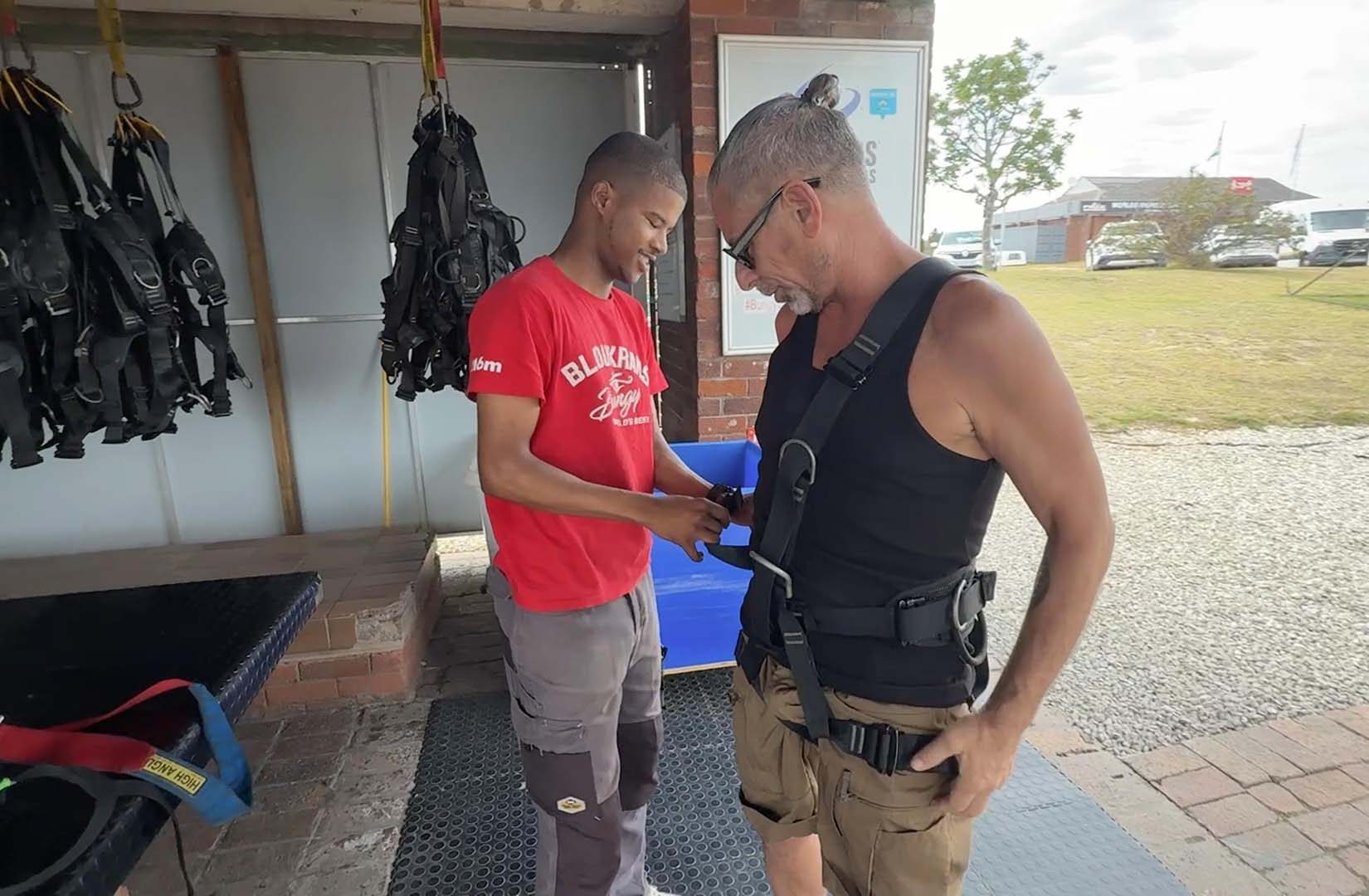
In reality you are connected at two independent points. The ankle attachment is the one you can see, wrapped and secured by the crew in front of you. Behind it sits a full body harness that is connected separately to the same system. If the primary attachment were ever compromised, the backup carries you on its own. You are never relying on one connection.
Every connection point is checked by more than one person before you move to the edge. Not because anyone expects a mistake, but because a system that assumes people are perfect is a badly designed system.
The cord is the least fragile part of the system
Bungy cords are engineered with a very large safety margin over the maximum load they will ever carry. They are not used until they fail. They are retired on a schedule based on the number of jumps and their age, long before performance degrades, and they are inspected before and throughout every operating day.
Cord selection is also matched to you. Your weight is recorded at check in, and it determines which cord you jump on. This is why the weigh in is not optional and why the number written on your hand matters. It is the single most important input in the whole calculation.
The crew is the real safety system
Equipment is only as good as the people operating it. The crew at Bloukrans are trained specifically for this site, work to a fixed procedure for every single jump, and run the same checks on the thousandth jumper of the month as on the first.
You will notice this on the day. The pace on the platform is calm and unhurried. Nobody is rushing you and nobody is improvising. That consistency is deliberate, and it is what a good safety culture looks like from the outside.
What the safety record actually means
Face Adrenalin has operated the Bloukrans Bridge bungy commercially since December 1997. In that time the site has recorded a 100% safety record across hundreds of thousands of jumps, and has hosted six Guinness World Records.
Those records are worth a moment of thought. One of them was set by Mohr Keet, who jumped at the age of 96. Another was set by Veronica Dean, who completed 19 jumps in a single hour. Records like these are not set at sites where the operator is hoping for the best. They happen where the system is repeatable enough that it can be run again and again without variation.
Face Adrenalin is also a member of SATSA, the Southern Africa Tourism Services Association, which requires operators to meet and maintain defined safety and business standards.
Who can jump, and who should not
The limits exist for engineering reasons, not arbitrary ones.
- You must be at least 14 years old.
- Minimum weight is 35kg and maximum weight is 150kg.
- If you have a heart condition, a back or neck injury, high blood pressure, epilepsy or are pregnant, speak to the team before booking.
If you are unsure whether something in your medical history rules you out, ask rather than guess. The crew would far rather have that conversation at the booking stage than on the bridge.
Fear is not the same as danger
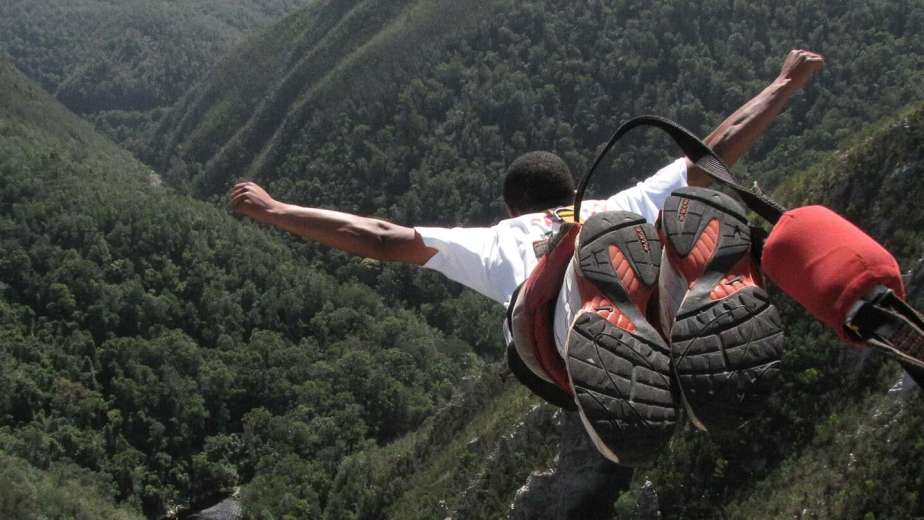
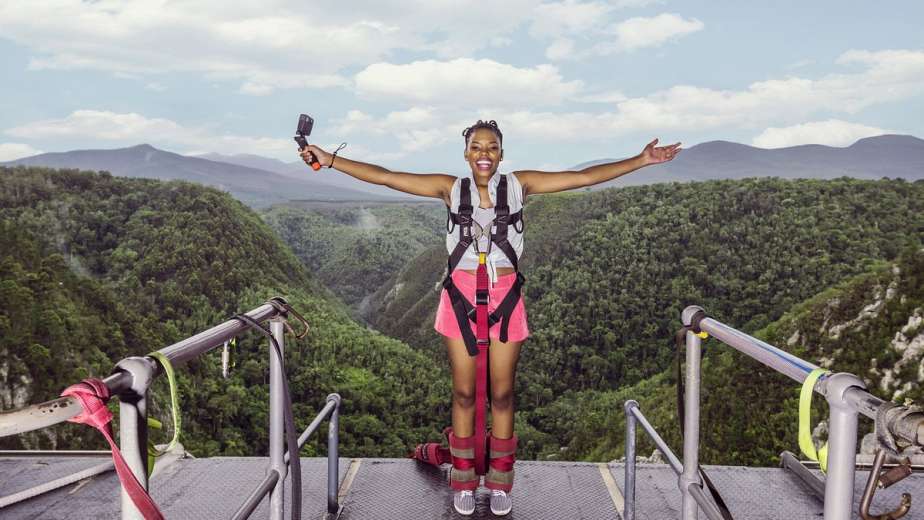
This is the distinction that matters most. Standing 216 metres above a gorge, your body will tell you that you are about to die. That reaction is hardwired and it is not a judgement about the equipment, the crew or the odds. It is simply what a human nervous system does at height.
Knowing that the fear is a false alarm does not make it disappear. It does make it possible to step off anyway, which is the entire point of the exercise.
What you can do on the day
- Listen to the briefing properly. It is short and it covers everything you need.
- Tell the crew if you are nervous. They deal with nervous jumpers every day and they are good at it.
- Do not stand at the edge deliberating. Go on the count. Hesitation makes it harder, never easier.
- Eat something beforehand, but not a large meal.
Still deciding
If you want the full detail on how the site operates, read more about our approach to safety or work through the frequently asked questions. If you would rather see exactly what the day looks like from arrival to the drive out, what to expect walks through it step by step.
And if you have decided you are doing this, the Full Adventure Package puts the bungy, the SkyWalk and the Zipline together in one visit. It is the way most people choose to do Bloukrans, and it is the one worth booking.



 Send message